
5 Practical Takeaways from Handy v. Jones (9th Cir. 2026) that protected Qualified Immunity
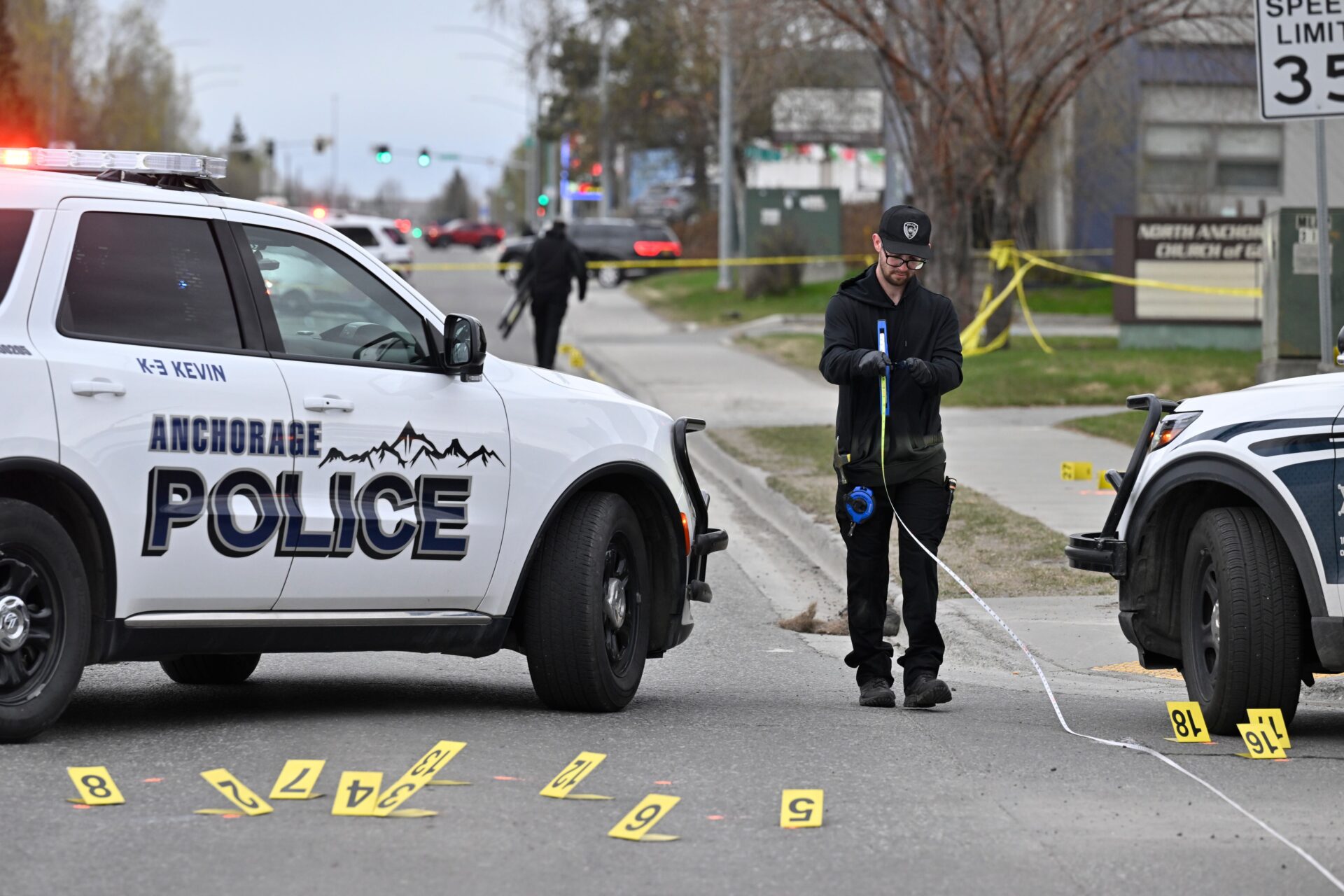
The Ninth Circuit’s September decision in Handy v. Jones is worth a read for anyone who signs off on use-of-force reports. The court reversed a denial of qualified immunity for four Anchorage officers and sent the case back with directions to grant it, and it did so at the motion-to-dismiss stage, which is early for a deadly force case. The reason it could is the record. Below are five documentation lessons I pulled from the opinion, and what each one means for the reports your officers write.
First, the short version of the facts. A neighbor called 911 several times late at night. She heard a woman “screaming, [p]lease stop!”, then “a loud thud against the wall,” and later what sounded like “two shots in the house.” She told dispatch that Handy was standing at the end of the driveway with a shotgun “waiting for the cops to come around the corner.” Officers called him out, and he came out carrying the shotgun. He refused repeated commands to raise his hands and drop the gun, waved it over his head, and kept walking toward the officers. When he stepped off the curb, they fired.
Why should a use-of-force report cover what happened leading up to the event, not just the moment of force?
The panel leaned on the Supreme Court’s 2025 decision in Barnes v. Felix, which rejected looking only at the “moment of threat” in favor of the “totality of the circumstances.” In the court’s words, “earlier facts and circumstances may bear on how a reasonable officer would have understood and responded to later ones.”
That’s exactly how the panel read Handy. It pointed to the reported assault and to the fact that he “had awaited the arrival of the officers armed with his shotgun, had refused orders to drop his weapon, was advancing toward the officers, was belligerent, and could fire the shotgun from his hip.” Taken together, the court said, those facts showed “Handy was dangerous regardless of where his shotgun was pointed.” A report that starts when the trigger is pulled leaves most of that out. What dispatch relayed, what officers knew about the subject and the location, and every command given before force was used belong in the report, because that’s the material a court will weigh.
How specific should a use-of-force report be?
Here’s where the case gets instructive. The district court and the Ninth Circuit looked at the same record and came away with different pictures. The district court saw a man who had followed the order to come out and was walking at a “casual pace,” and it decided a jury could find he wasn’t an immediate threat. The Ninth Circuit answered that “he may have been advancing at a ‘casual pace,’ but he remained armed, agitated, and capable of immediately firing at the Defendants.”
When the facts are general, there’s room for both readings. Specific detail closes some of that room. That means distance and direction of movement, where the weapon was and how it was being handled, the exact words of each command and how many times it was given, and what each officer knew at that moment. The opinion also restates a rule every officer should keep in mind when writing: “[o]nly information known to the officer at the time the conduct occurred is relevant.” The camera can’t capture what an officer knew going in, so the report has to.
What warnings should a use-of-force report document?
The warning issue shows up in the opinion as a caution. The district court noted that “the officers only warned Mr. Handy that the K-9 dog would be used if he did not exit his apartment; they did not warn him that deadly force would be used,” and it treated that as “some evidence of objective unreasonableness.” The Ninth Circuit didn’t adopt that reasoning, but it still got argued all the way up the chain. Officers should write down every warning they gave, when they gave it, and what they said. When a warning wasn’t feasible, the report should explain why.
Should each officer’s force be reported separately?
Not every officer on scene fired, and the district court pointed to that in denying immunity. The Ninth Circuit disagreed, writing that “the fact that some officers did not fire does not mean that Handy did not pose an immediate threat.” Courts look at each officer’s decision on its own, and so do reporting laws. Colorado’s SB20-217, for example, requires Agencies to report force by officer, including name and POST number, and drawing a weapon counts as reportable force. A single combined narrative makes it hard to show what each officer saw and did, so each officer’s force (and each officer’s decision not to use it) should be documented separately.
What evidence belongs in the use-of-force record?
The Anchorage Police Department released a Critical Incident Summary that, according to the opinion, contained “not only the dash cam and body camera video footage but also the 911 calls, other videos, and commentary.” The plaintiffs incorporated that video into their complaint, so the court viewed “the facts in the light depicted by the videotape.” The Department’s own release, in other words, became the factual record, and that’s a big part of why the case could be resolved before discovery. Every video and audio source tied to an incident (body cam, dash cam, 911, radio) should be linked to the report and flagged for retention, and the written report should line up with what the footage shows.
How our Officer Actions tool can help you build complete reports:
We’re not going to pretend that our software can decide a case; the law and the facts do. What good documentation does is make sure those facts get captured completely and consistently, so they’re there when a court, a review board, or your own command staff needs them. Transparent, consistent records also give command staff something concrete to explain to their community.
That’s the thinking behind EFORCE® Officer Actions. We designed it in response to Colorado’s SB20-217, and we built it with the flexibility to handle similar laws as other states adopt their own similar legislation. State and Federal reporting standards are baked in to the officer’s existing report, inside work patrol is already doing like Incident Reports, Citations and FI-Cards, so officers aren’t entering the same incident twice, and can get back on the street. It also supports state-mandated bias reporting, such as racial profiling.
If you’re looking at use of force reporting software for your Agency, download the Officer Actions overview, or we’d be glad to walk you through it. You can schedule a personalized demo of this, and other products here:
- https://www.eforcesoftware.com/request-a-demo/
- 888-570-4943 x.3
- [email protected]